
Last updated November 15, 2026
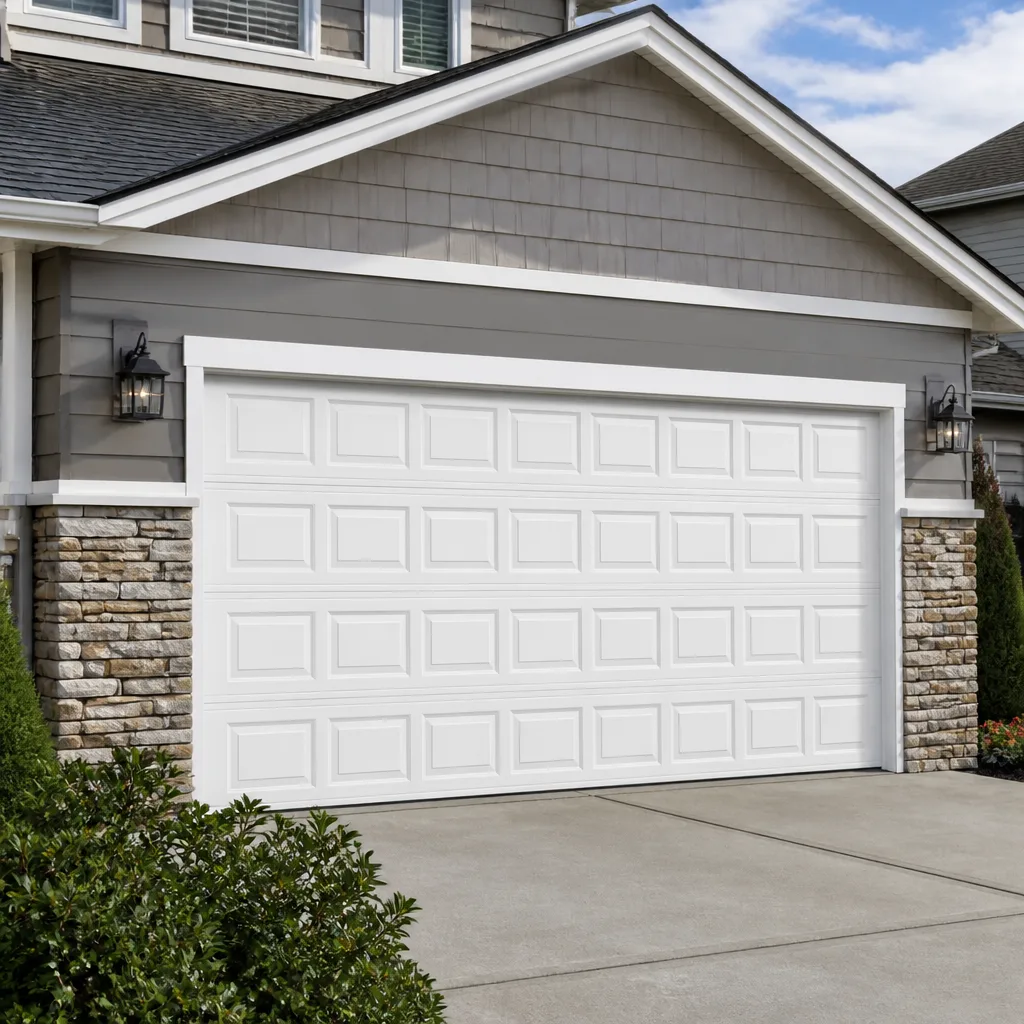 Raised-panel steel
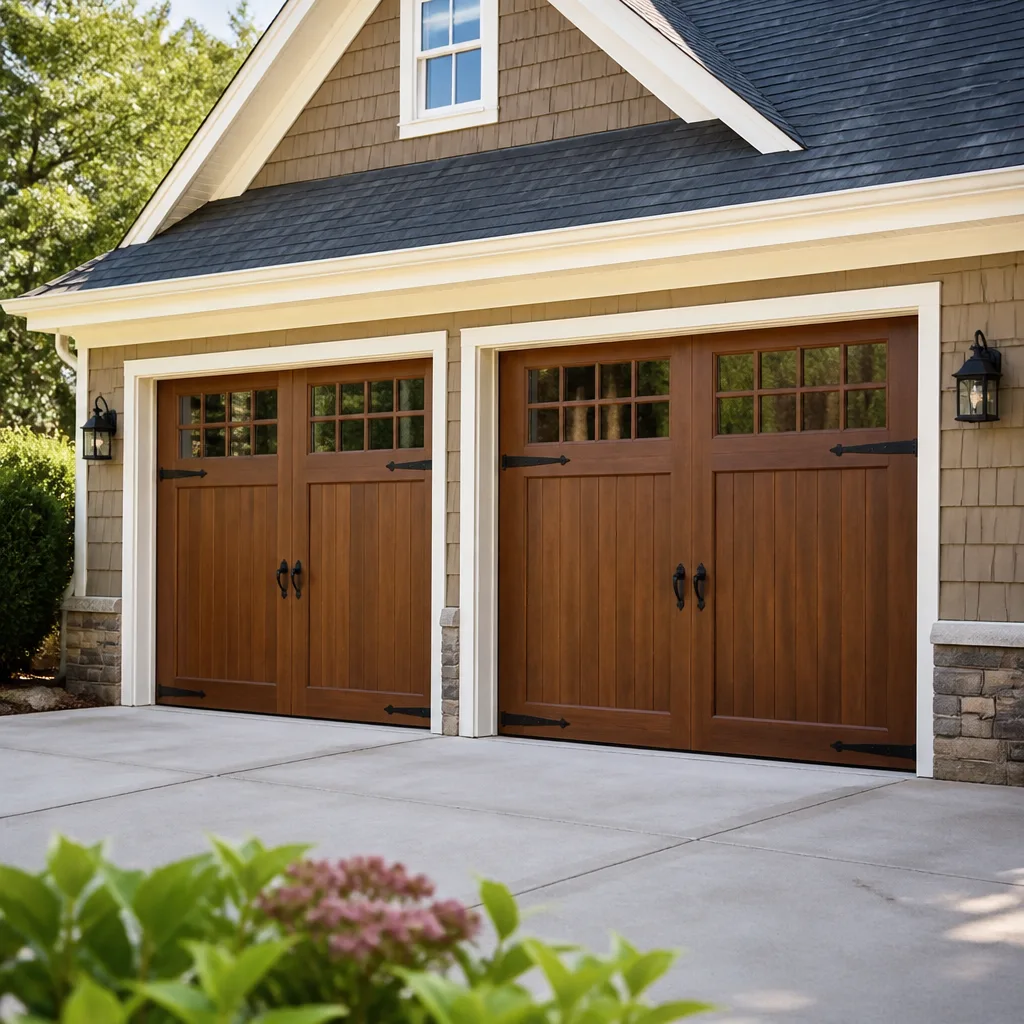 Carriage house
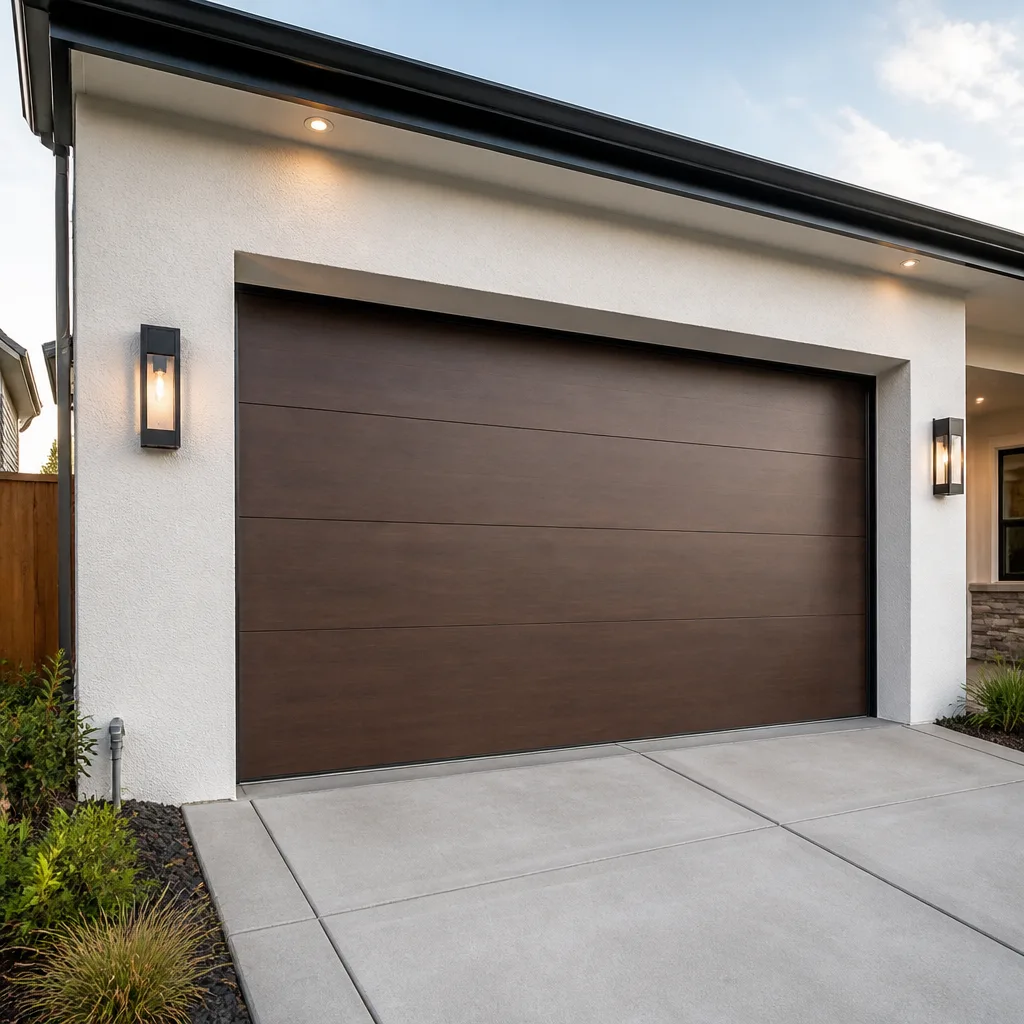 Modern flush
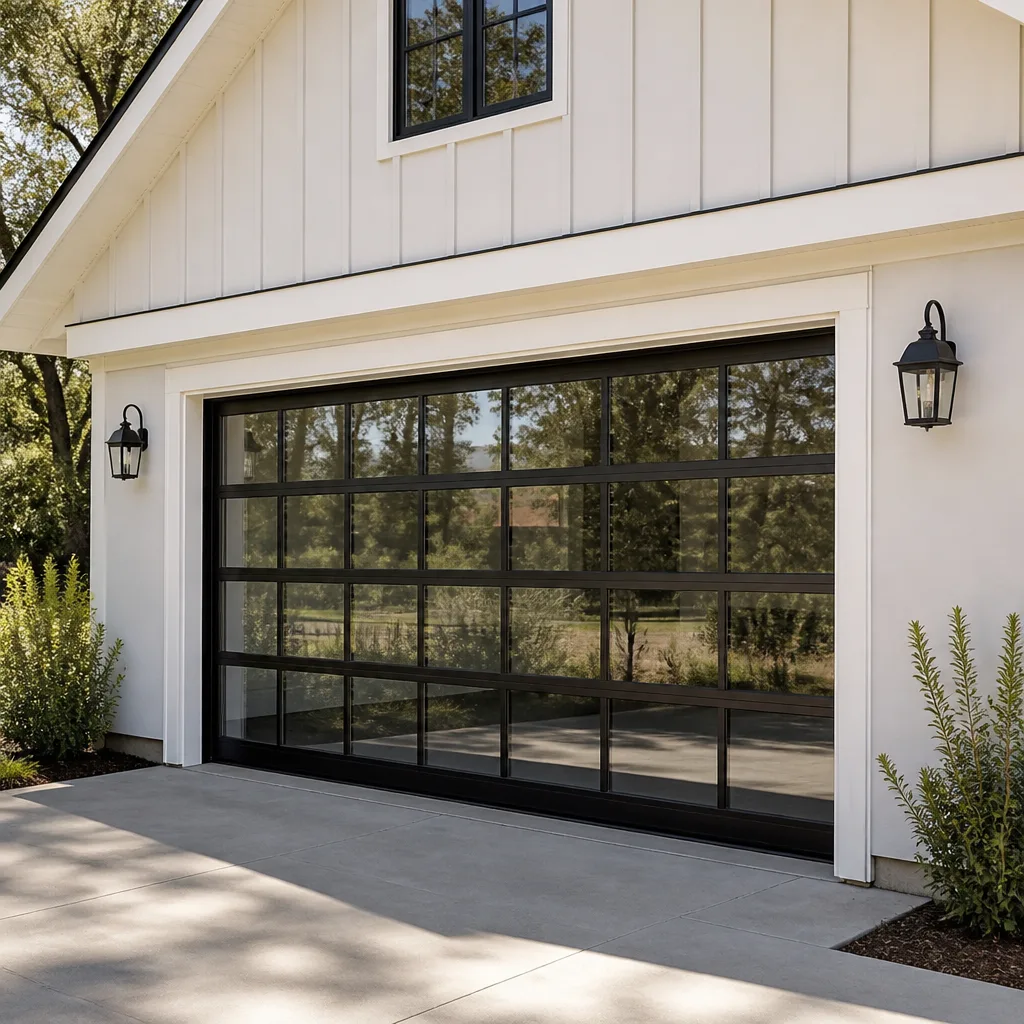 Full-view glass
 LiftMaster openers
 Chamberlain openers
Full 25-point door and opener safety check with every visit - springs, cables, rollers, tracks, and your LiftMaster or Chamberlain opener included
You get a price before we start. It does not change when the pro arrives.
Get your free estimateGarage Door Warning Signs: A Minneapolis Homeowner’s Reference Guide
A door that reverses without warning and a door that makes a new grinding sound are both “warning signs,” but they sit at opposite ends of the same spectrum. One can fail completely within a day or two. The other can safely wait until your next scheduled service. Most lists of garage door symptoms flatten that difference, which leaves homeowners either panicking over a cosmetic seal gap or ignoring a cable that’s about to snap. This guide separates the two. We break warning signs into three urgency tiers, add the failures we see most often in Minneapolis homes through freeze-thaw cycles and road salt, and give you a 90-second check you can run without picking up a single tool.
Quick Answer
Garage door warning signs fall into three urgency tiers. Tier 1 signs – a broken torsion spring, a frayed or kinked cable, or a door that has jumped its track – mean stop using the door now and call a professional, because these failures can drop a 150-plus-pound door on a person or a vehicle. Tier 2 signs like slow opener response, uneven travel, or visibly worn rollers need service within about two weeks before they escalate. Tier 3 signs such as minor weather seal gaps or faint paint cracking can be noted and handled at your next service call.
Styles & brands we work with
- Raised-panel steel
- Carriage house
- Modern flush
- Full-view glass
- LiftMaster openers
- Chamberlain openers
Table of Contents
- Tier 1: Signs to Stop Using the Door Today
- Tier 2: Signs to Schedule Service Within Two Weeks
- Tier 3: Signs to Note and Address at Your Next Service
- Minneapolis-Specific Warning Signs National Guides Miss
- The 90-Second Visual Check: No Tools Required
- When the Problem Is the Opener, Not the Door
- Brand Matters: Why a Symptom Can Point to a Specific System
- Repair or Replace? Reading the Signs Together
Tier 1: Signs to Stop Using the Door Today
These are the signs where the safe move is to stop operating the door and call a trained professional. We put them first because they carry real physical danger, not just inconvenience.
A broken torsion spring. If you hear a loud snap from above the door and the door suddenly becomes almost impossible to lift by hand, the torsion spring has failed. Torsion springs are under extreme tension, and they store the force that counterbalances the full weight of the door. When one breaks while the door is open or cycling, the door can come down hard. Never try to wind, tension, or replace a torsion spring yourself. Repairing one requires winding bars and the right technique, and an untrained attempt can cause a serious injury. A spring price is per spring, and a matched pair is usually replaced together, so plan for a pair rather than a single unit.
A frayed or kinked cable. Look at the steel cables running along the sides of the door. They should sit clean and taut in their tracks. Frayed strands, a kink, or a cable hanging loose means the door could drop or bind at any moment. Cables are also under high tension. Don’t touch them and don’t run the door.
A door that’s off its track. If the door looks crooked, one side is dragging, or a roller has popped out of the track, the door is no longer aligned with its hardware. Running it can bend the panels or damage the tracks beyond repair. Each of these is a safety issue, not just a convenience issue: a door that fails under load is a heavy moving object above a space where people and cars sit.
If any of these three signs shows up, stop using the door and garage door repair is the right call. Call (855) 213-4171. We answer 24/7. Fast dispatch from 7am to 7pm, Sunday through Friday.
Tier 2: Signs to Schedule Service Within Two Weeks
Tier 2 signs rarely fail suddenly. They degrade, and the degradation is gradual enough that you’ll fall into a routine of ignoring it until something in the system gives way. Here’s what to schedule within about two weeks, and what happens if you don’t.
- Slow or inconsistent opener response. The opener may be straining, the drive gear may be wearing, or a remote or wall control may be failing. Ignoring it often leads to a dead opener and a door you have to open by hand.
- Uneven travel. If the door lifts or lowers faster on one side or hesitates partway, one spring may be losing tension or a cable may be slipping. Left alone, the imbalance can wear the tracks and the opener motor faster.
- Visibly worn rollers. Nylon rollers that are flat, chipped, or rattling in their hinges are close to seizing. A seized roller can damage the track. That escalates a roller replacement into a track repair.
- A door that reverses before it should. If the safety reverse stops the door halfway down for no obvious reason (nothing under it), the opener or the sensors need a look. This is a symptom, not a setting.
Escalation is usually simple: a worn roller becomes a bent track, a tired spring becomes a broken spring, and a slow opener becomes a motor that burns out. Getting ahead of it typically saves the larger repair. If the door is also garage door opener repair territory, one visit covers both the door and the opener.
Tier 3: Signs to Note and Address at Your Next Service
Tier 3 signs are the ones most guides overstate. They matter, but they won’t strand you and they don’t require an emergency visit. Note them and handle them the next time a technician is already out.
- Minor weather seal gaps. A bottom seal that’s started to pull or a slightly loose threshold seal lets in a little air and moisture. It rarely turns into a flood. Left through a full Minneapolis winter, though, it can allow meltwater to creep under the seal and refreeze against the threshold.
- Slight paint cracking or bubbling on panels. Cosmetic cracking on older steel panels is mostly appearance. It can let in moisture, but the pace is slow. This is a paint and panel issue to budget for, not a safety call.
- Faint changes in the opener’s hum. A slightly louder drone or a new small clunk that appears slowly is usually belt or chain wear. Note it and mention it at the next service. If the change comes on suddenly with a vibration, that moves up to Tier 2.
Note these in a phone note and move on. Minneapolis homeowners with a lot going on don’t need a service call for a slightly creaky door that’s otherwise working correctly.
Minneapolis-Specific Warning Signs National Guides Miss
National warning-sign guides are written for a climate average. Minneapolis isn’t average. Freeze-thaw cycles, road salt tracked into the garage, and shrinking winter humidity put specific stress on door hardware that a guide written in a mild climate won’t mention. Here are the local signs worth watching.
Threshold ice bonding damage. When meltwater drains off a car and refreezes at the bottom of the door, the bottom seal can bond to the threshold overnight. Lifting the door the next morning can pull the seal loose, tear the rubber, or stress the opener. Look for a bottom seal that’s stretched or torn after a cold snap. It’s a Minneapolis fact that a door can get frozen to its own threshold without any other symptom.
Salt-accelerated bottom seal and hardware decline. Road salt on the car floor and in the garage eats rubber and metal over time. If your bottom seal looks cracked and crumbly, or the bottom hinges or roller brackets show rust faster than the rest of the hardware, the salt is working its way in.
Freeze-expanded panel joints and gaps. Water that gets behind panel seams and freezes can push the seams apart, widening gaps over a couple of winters. On an older steel door, small vertical gaps along a panel might be freeze-related rather than impact damage. A door that has gotten noticeably draftier in Minneapolis over the last two winters is a door with a panel-seam issue worth checking.
These local signs don’t all fall into Tier 1. But the weather that produces them runs every winter, so they deserve more attention than the generic “check your door” advice. When a door has been shutting out Twin Cities winters for a while, a full garage door checkup is worth it.
The 90-Second Visual Check: No Tools Required
Once a month, take about 90 seconds and look at your door. You don’t need tools, a ladder, or mechanical knowledge. You’re looking for the Tier 1 signs listed above, and for changes from last month. Here’s the routine we’d walk a homeowner through.
- Stand outside and look at the closed door from 10 feet back. The bottom edge should sit flat against the floor, evenly, across the full width. One side up and one side down, or an obvious gap, moves up to Tier 2.
- Look along both vertical tracks. They should look straight and parallel. Any bend, kink, or roller that’s out of its channel is a Tier 1 sign. Stop here and call.
- Look at the cables. With the door closed, the cables should sit cleanly in their tracks. Frayed strands or a cable hanging loose is Tier 1.
- Look at the springs above the door. Look, don’t touch. A gap in a torsion spring (a coil that has clearly snapped apart) or a visible break means the spring is gone. Tier 1.
- Look at the bottom seal. Run your eye across the width. Crumbling, torn, or frozen-to-the-floor spots are Tier 2 or 3 depending on severity.
- Look at the panels. Note cracking, bubbling, or gaps at the seams. On a Minneapolis door that sees salt and freeze-thaw, this is where the local wear shows up.
- Operate the door once from inside, with the door in full view. Does it rise evenly? Is the noise new? Does the opener reverse quickly when you wave an object under the safety sensor? If anything reverses the door before it should, note when and how, so a technician has a starting point.
The check is designed to flag the highest-risk failure points without asking you to touch anything that stores force. That’s deliberate. Torsion springs and cables are the most dangerous parts on the door, and a trained professional is the only person who should get hands-on with them.
When the Problem Is the Opener, Not the Door
Door warning signs and opener warning signs get mixed up. They’re different systems, and separating them saves you from paying for a repair you don’t need. Here’s how we tell them apart.
If the door binds, squeals, hangs, or rubs when operated by hand (with the opener disconnected, which a technician can do safely), the problem is mechanical: springs, rollers, tracks, or cables. If the door moves freely by hand but the opener refuses to engage, reverses for no reason, or makes the sound of a motor running with no door movement, the opener is the issue.
On the opener side, these are the signs to watch for:
- Motor runs but the door doesn’t move (often a stripped gear or a broken drive belt or chain).
- Remote works intermittently, or one remote has stopped while another still works (a battery or programming issue, sometimes a wall control or logic board problem).
- The door reverses on its own, or the safety sensors act up in cold weather.
- A grinding or clunking sound from the opener housing.
Most Minneapolis homes run a LiftMaster, Chamberlain, Genie, or Craftsman opener, and those four cover the vast majority of residential openers already installed around the Twin Cities. Our technicians are trained on all four, plus door brands Clopay, Amarr, Wayne Dalton, and Raynor, so we can diagnose door and opener issues in one visit. Our technicians have up to 8 years of experience working on this exact equipment.
Brand Matters: Why a Symptom Can Point to a Specific System
A symptom is a symptom, but the fix depends on what’s on your door. A slow, straining opener on a Chamberlain doesn’t get diagnosed the same way as a straining opener on a Genie. A grinding sound from a Wayne Dalton door can come from a roller issue or a hinge one, depending on how the door’s built. This is why knowing the brand saves homeowners time, and why a technician who’s familiar with your equipment gets to the right diagnosis and the right part on the first visit.
We work on the door that’s already on your home. We don’t steer customers toward a particular brand because it pays better, and we don’t push a full replacement when a repair will get you years more out of the door. Repair first, replace only when it makes sense. That’s the approach.
When replacement does make sense, we install Clopay, Amarr, Wayne Dalton, and Raynor doors, so we can move a customer from repair consultation to a new door without handing them off to a second company. Installation work is measured, ordered, and scheduled. The free estimate comes first, in writing.
Repair or Replace? Reading the Signs Together
One warning sign is a maintenance note. Several signs clustered in the same system, or repeated repairs on the same door, start to look like a replacement conversation. Here’s how we weigh it with a Minneapolis homeowner.
Lean toward repair when: the door is structurally sound, the panels aren’t dented or rotted, the tracks are straight, and the failure is mechanical (springs, cables, rollers, opener). Most of what we fix on a routine visit is repair territory.
Lean toward replacement when: multiple panels are damaged or rotting, the door has had repeat hardware failures in a short window, the frame or track is bent beyond what repair can straighten, or a Minneapolis door has seen enough salt to eat through the bottom panels and hardware. Panels that are structurally compromised aren’t a safety fix, they’re a replacement.
The honest answer is that replacement is often a choice, not a necessity, and it’s usually the homeowner’s call. Our job is to lay out both and quote the price either way, so you’re choosing between real numbers, not between a pitch and a better pitch.
Common Mistakes to Avoid
- Ignoring a Tier 2 sign “until spring.” In Minneapolis, that timeline crosses the freeze-thaw season, and a worn roller or weak spring that was fine in September can snap by February. Address it inside two weeks, not two seasons.
- Trying to fix a torsion spring or cable yourself. Home improvement videos make this look like a weekend project. It isn’t. These parts carry huge force, and an injury is the risk. Move it to a phone call.
- Spraying a lubricant on a problem to make the noise go away. Lubricant on a worn roller might quiet it for a week and mask a Tier 2 problem until it’s a Tier 1 problem. Fix the cause, not the sound.
- Assuming the opener is the problem because the door is slow. In our experience, a slow or straining door is frequently a spring or roller issue, and replacing the opener won’t fix it. Connect the symptoms before connecting the bill.
- Patching a torn bottom seal with a hardware-store strip and forgetting it. In a Minneapolis winter, a bad seal pulls in meltwater that refreezes at the threshold. A temporary patch can lead to a frozen door and a bigger hardware problem.
- Looking for the door brand and not the opener brand. Both matter. Knowing you have a Clopay door plus a Genie opener is what lets a technician bring the right part the first time.
- Calling a full replacement before a technician has diagnosed it. A door that’s off its track might need track work, not a new door. Get a diagnosis first, then decide. That’s especially true on a Minneapolis door worth keeping.
See the difference
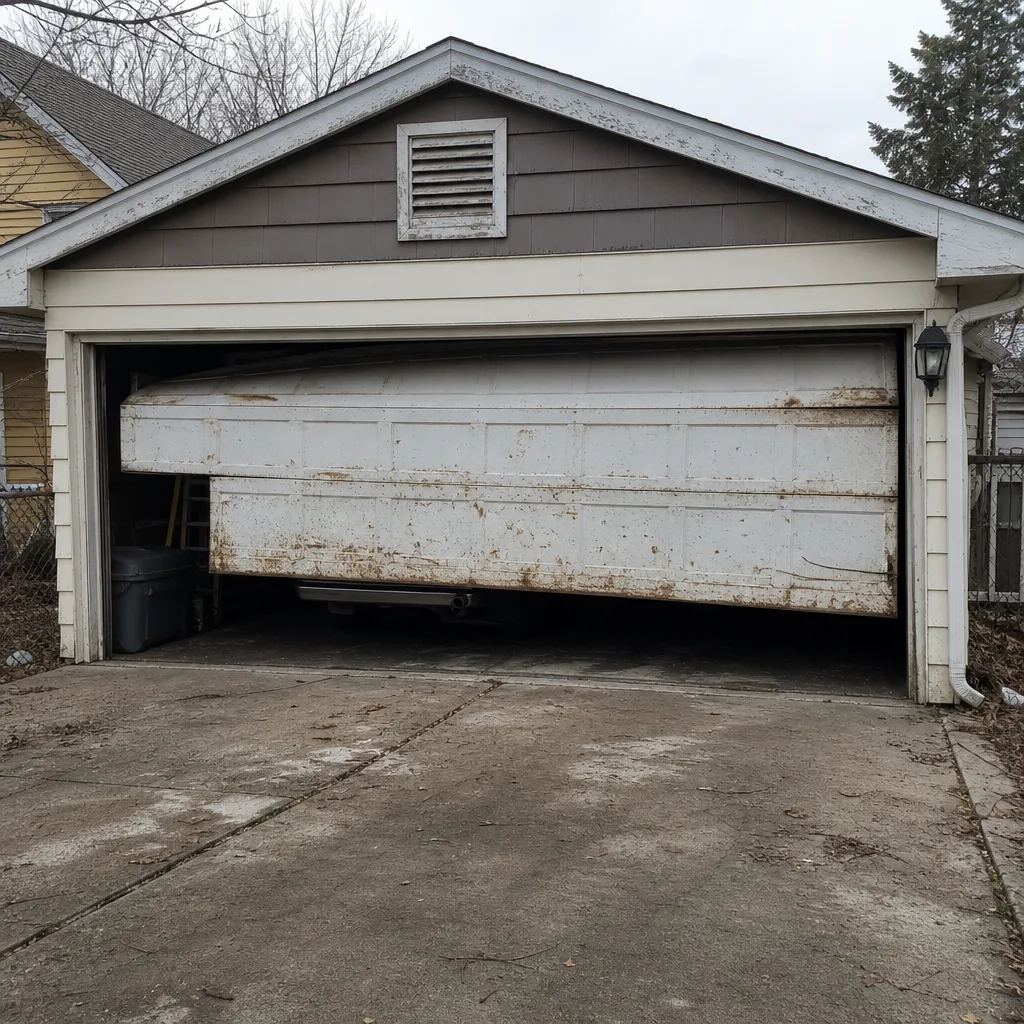 Before
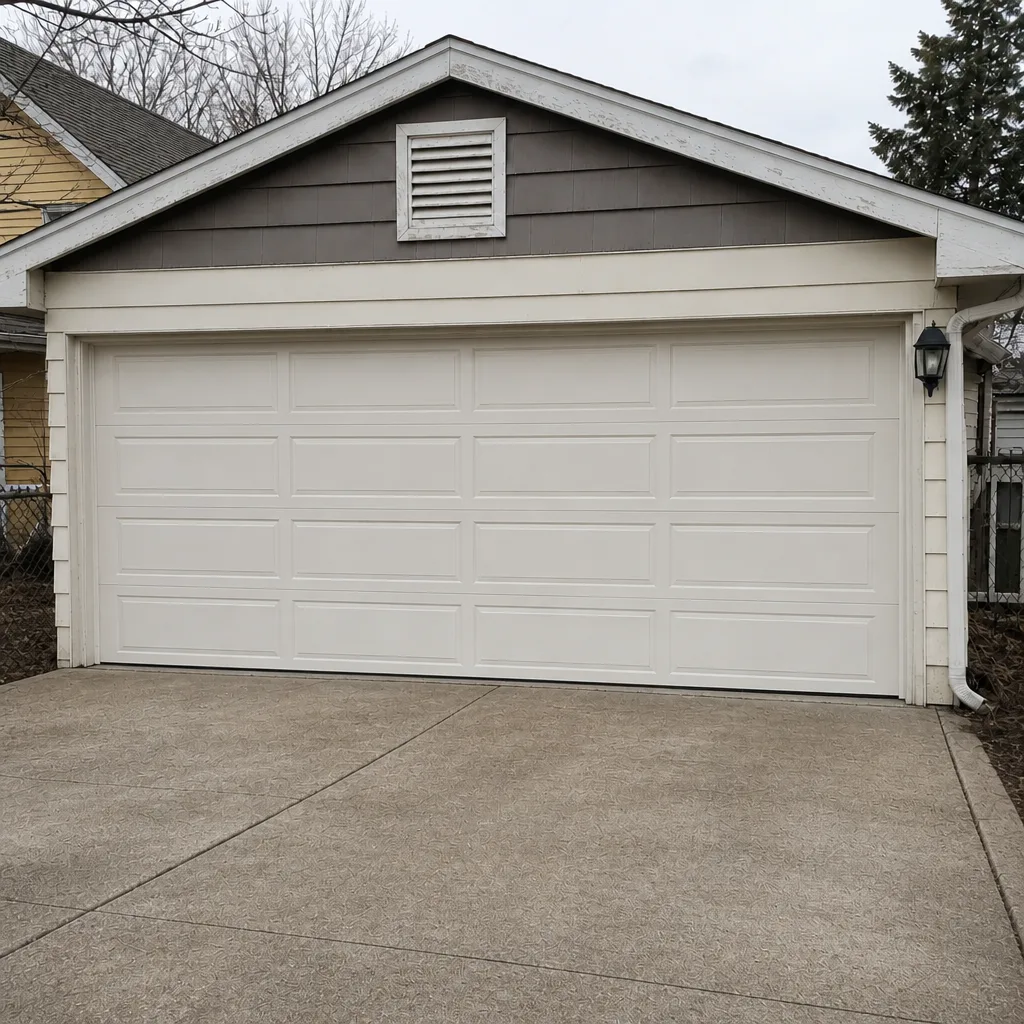 After
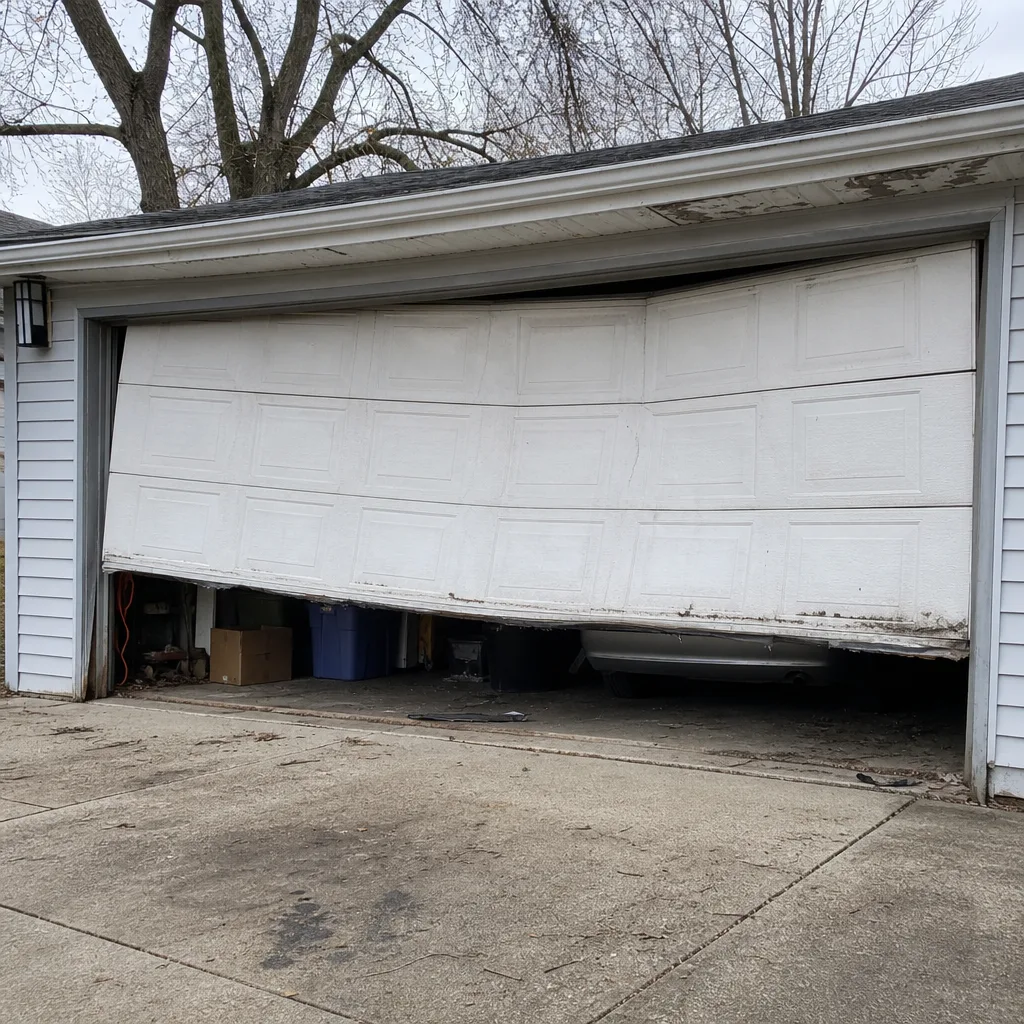 Before
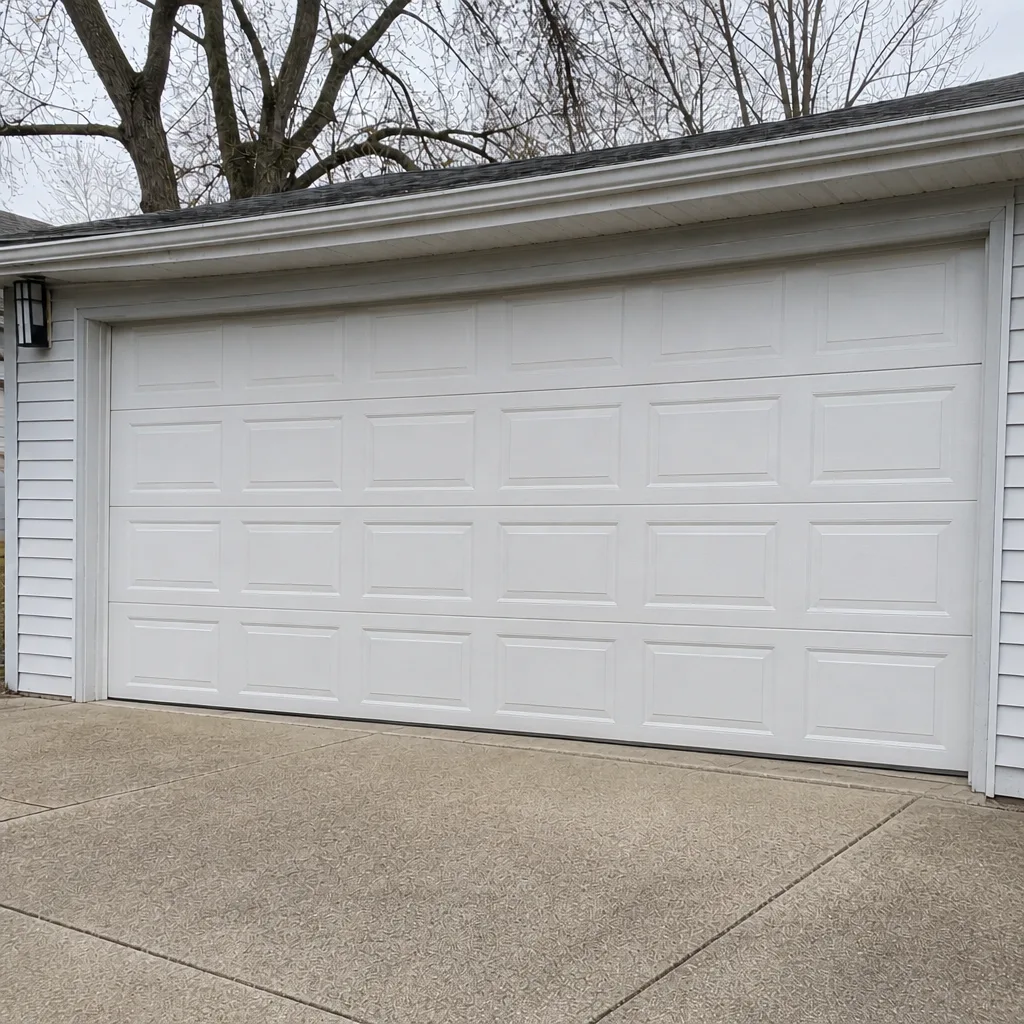 After
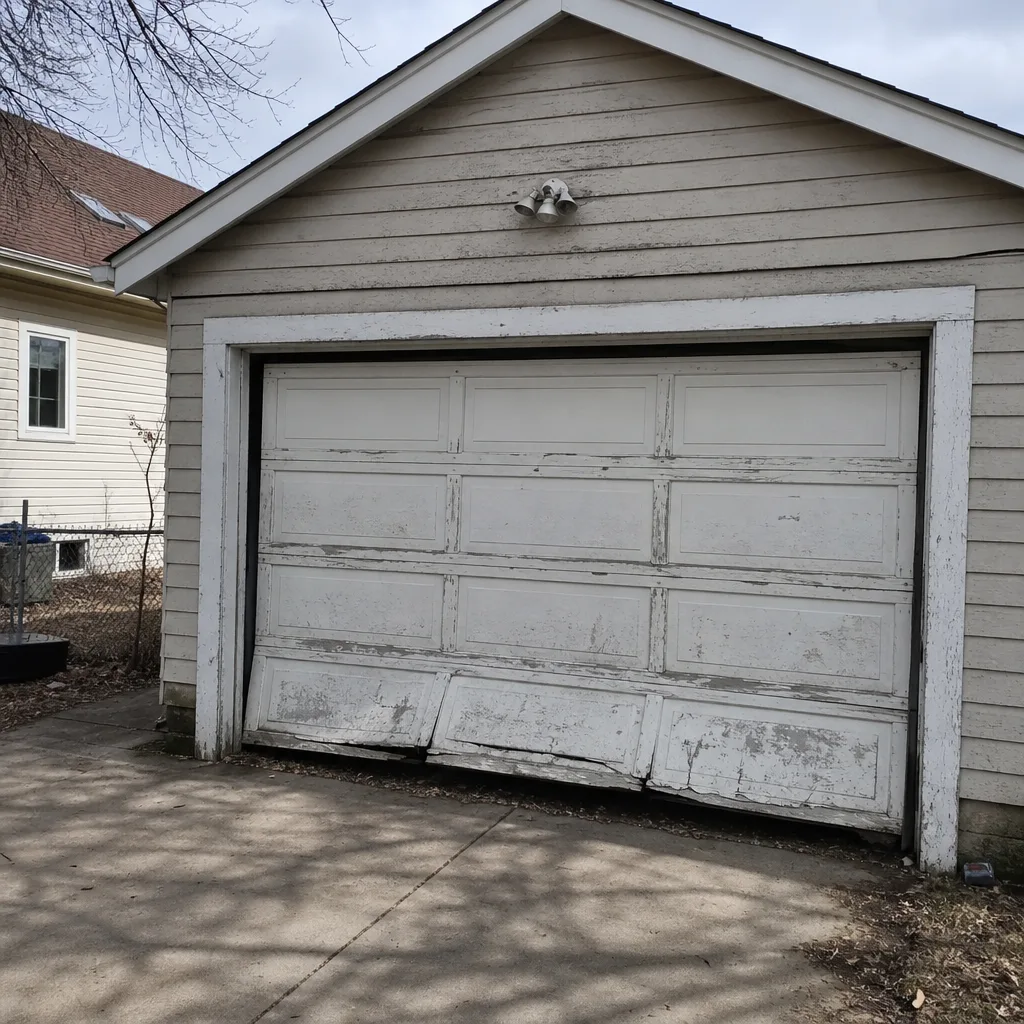 Before
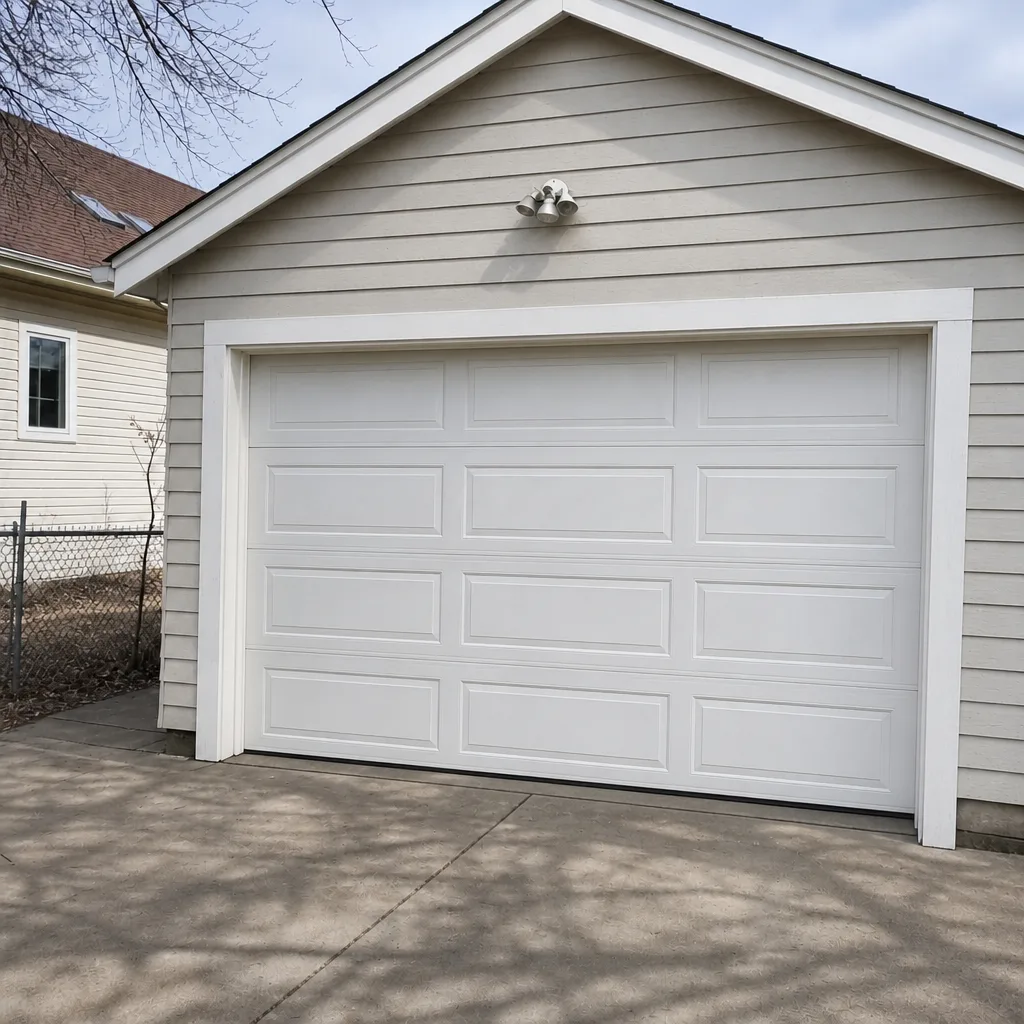 After
When to Call a Professional
Call a professional when you see any Tier 1 sign: a broken torsion spring, a frayed or kinked cable, or a door that’s jumped its track. Stop using the door first, then call. Call if you see two or more Tier 2 signs at once, or if a single Tier 2 sign has been there for more than two weeks. And call if the door is reversing without an obvious reason, because that’s a safety-system failure, not a setting to fiddle with.
For a Minneapolis door with weather-related wear, freeze-expanded panel gaps, or a bottom seal that’s been deteriorating, a short checkup covers it. Minneapolis homeowners can get a free estimate from Parkway Garage Door Repair by calling (855) 213-4171. We answer 24/7. Fast dispatch from 7am to 7pm, Sunday through Friday. Estimates are free, and the price is quoted and agreed before any work starts.
Frequently Asked Questions
If the door won’t move smoothly by hand, has a snapped torsion spring, a frayed cable, or is off its track, it needs repair right now – stop using it and call. If the door works but is slow, noisy, slightly uneven, or has worn rollers, it can typically wait about two weeks. If it’s just a small seal gap or light paint cracking, note it and handle it at your next service. When in doubt, call (855) 213-4171 for a free estimate. We answer 24/7.
A broken torsion spring usually makes a loud snap or pop, like a gunshot or a heavy branch cracking, and the door becomes almost impossible to lift by hand afterward. If you hear that sound and the door won’t open normally, the spring has likely failed. Don’t force it. Call (855) 213-4171 and we’ll diagnose it. We answer 24/7.
Freeze-thaw cycles are the main reason. Meltwater from a car drains to the threshold and refreezes, which can bond the bottom seal to the floor and tear it when the door lifts. Road salt in the garage accelerates corrosion on the bottom seal and hardware. Cold-shrunk seals, ice at the threshold, and humidity swings put stress on springs and rollers. A door that’s fine in summer can develop a Tier 2 problem by January. That’s why a winter visual check is worth doing in Minneapolis.
Often, yes. We answer 24/7, and fast dispatch runs from 7am to 7pm, Sunday through Friday. We work on the dominant home opener brands – LiftMaster, Chamberlain, Genie, and Craftsman – so we can diagnose and repair the vast majority of openers in one visit. Call (855) 213-4171 and we’ll book the visit and confirm the timing with you.
No. The price is set by the written estimate, and it’s quoted and agreed before any work starts. We diagnose the door and the opener, lay out the options, and put the number in writing. You approve it or you don’t. Estimates are free.
Repair is usually the right call if the panels are sound and the failure is mechanical – springs, cables, rollers, openers. Replacement makes more sense when several panels are damaged or rotting, the tracks are bent past repair, or the door has had repeated hardware failures. A Minneapolis door that’s been eaten by road salt at the bottom is a replacement candidate. We’ll quote both so you can compare the numbers, not a pitch.
The Bottom Line
Most garage door warning signs are not emergencies, and the ones that are don’t look like a loud noise – they look like a snapped spring, a frayed cable, or a door that’s off its track. Tier 1 means stop and call. Tier 2 means book service inside two weeks. Tier 3 means note it and handle it at the next visit. In Minneapolis, add the local signs: a bottom seal bonded to the threshold, salt-accelerated hardware, and freeze-expanded panel gaps. Run the 90-second check once a month, keep the brand names of your door and opener handy, and call when you’re not sure. The cheapest repair is the one you catch at Tier 2. Call (855) 213-4171 for a free estimate. We answer 24/7. Fast dispatch from 7am to 7pm, Sunday through Friday.
Written by the team at Parkway Garage Door Repair.